Aligning Preseason League Data with Instantaneous Match Statistics for Building Cross-Sport Accumulators
Written by Harper Krüger · Jul 31, 2026
Aligning Preseason League Data with Instantaneous Match Statistics for Building Cross-Sport Accumulators
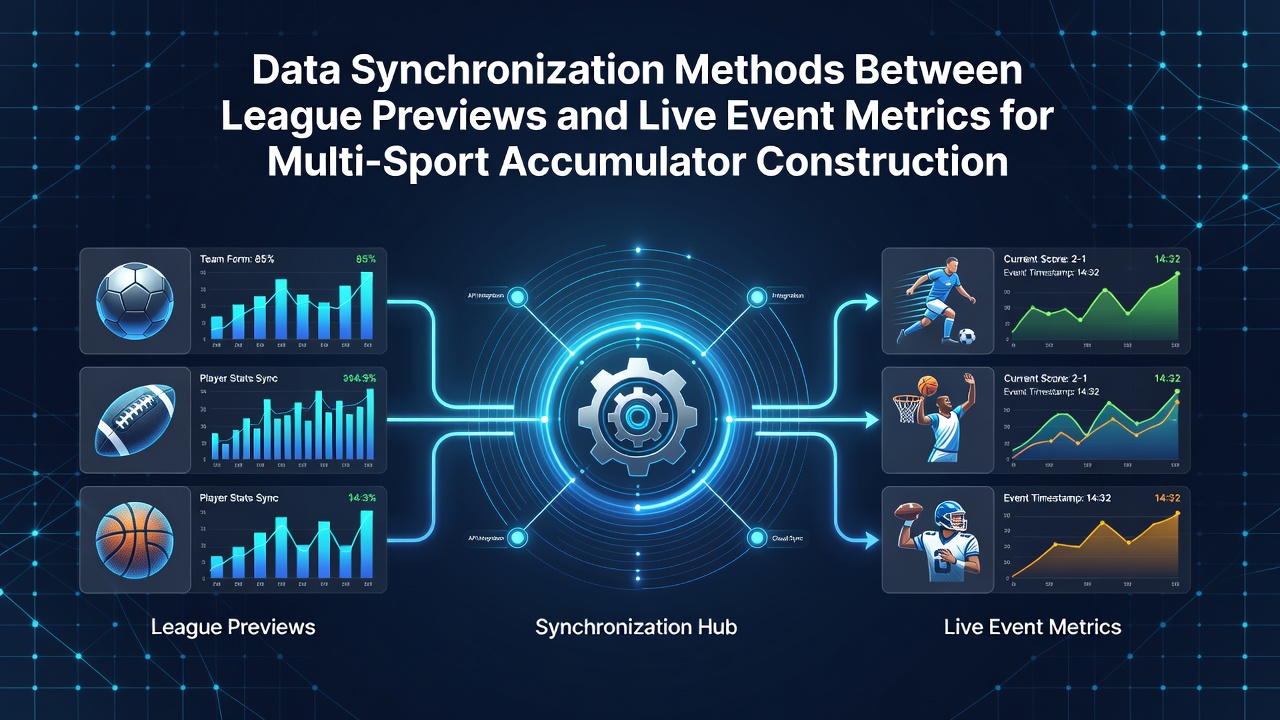
League previews compile historical performance indicators, team form trends, and player availability reports weeks or months ahead of scheduled fixtures, while live event metrics capture real-time variables such as possession percentages, serve success rates, and pace metrics that shift during competition. Observers note that effective accumulator construction across football, tennis, and horse racing requires these two data streams to remain aligned through structured synchronization protocols that update preview baselines with incoming live feeds at consistent intervals.
Core Data Categories in Preview and Live Systems
Preseason league datasets typically aggregate season-long statistics on goal differentials, head-to-head records, and injury timelines that tipster platforms store in relational databases for rapid query access. Live event metrics arrive through application programming interfaces from stadium sensors, optical tracking cameras, and official scoring feeds that refresh every few seconds during matches. Those who manage multi-sport accumulator models combine these categories by mapping preview identifiers such as team codes or player IDs directly to live data streams so that predicted probabilities adjust automatically when actual conditions diverge from preseason expectations.
Synchronization Protocols and Update Mechanisms
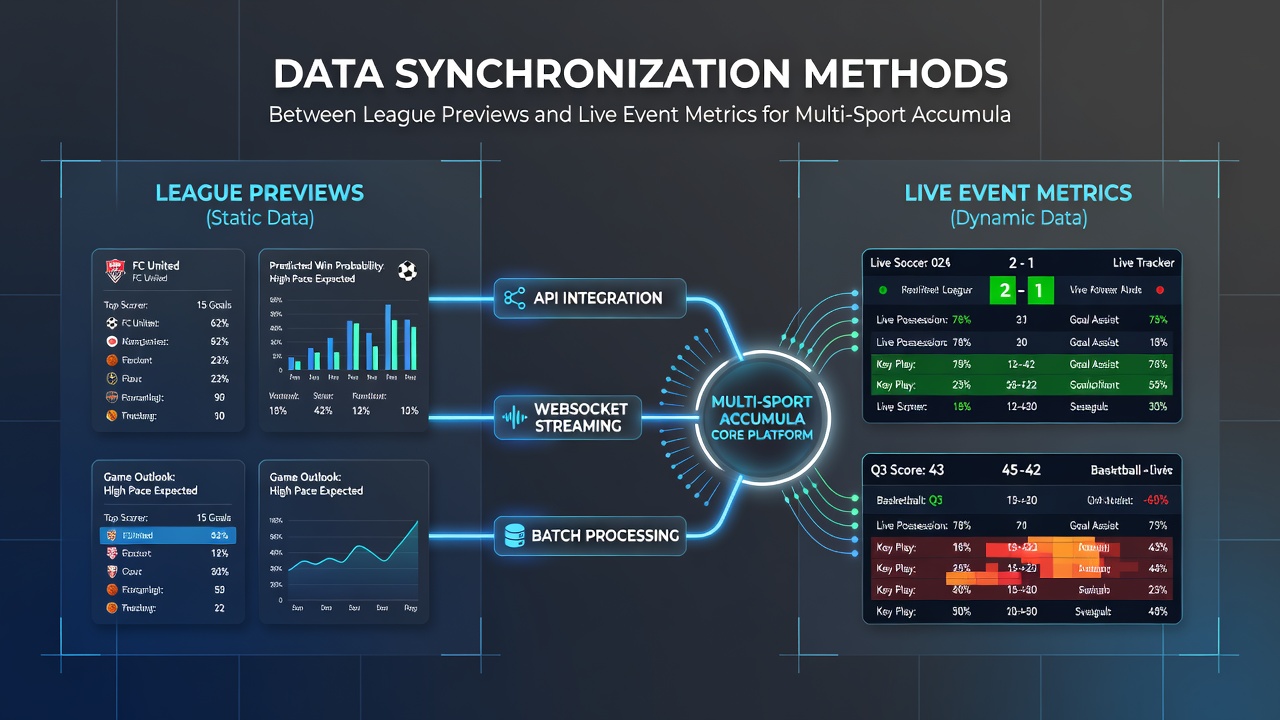
Batch processing handles overnight reconciliation where preview tables receive aggregated summaries from completed events, whereas real-time streaming employs message queues and event-driven architectures that push metric changes into accumulator engines without full table reloads. Researchers at the MIT Sloan Sports Analytics Conference have documented how timestamp alignment and delta detection routines prevent drift between static forecasts and dynamic inputs during extended tournament windows. In July 2026 several platforms introduced enhanced websocket connections that reduced latency between league preview refreshes and live tennis point-by-point updates, allowing accumulators spanning multiple disciplines to recalculate odds within sub-second windows.
Implementation Across Sports
Football accumulators often synchronize expected goal models from preseason previews with live possession and shot location data to adjust stake allocations mid-match, while tennis builders link serve percentage forecasts to instantaneous rally length statistics. Horse racing models integrate track condition previews with sectional timing feeds that update as races progress, ensuring that cross-sport combinations maintain internal consistency when one leg finishes and another begins. Data pipelines use standardized schemas such as JSON or protocol buffers to translate between these heterogeneous sources, and checksum verification routines confirm that no metric values are lost during transfer.
Technical Tools and Infrastructure
Modern synchronization relies on extract-transform-load frameworks augmented with change data capture layers that detect modifications in source systems and propagate them to accumulator calculation engines. Cloud-based message brokers such as Apache Kafka manage high-volume event traffic during peak periods like simultaneous European football fixtures and North American tennis tournaments. According to research published through the MIT Sloan Sports Analytics Conference, latency tolerances below 500 milliseconds prove critical for in-play accumulator adjustments, prompting operators to deploy edge computing nodes near major sporting venues. Database replication with eventual consistency models allows preview tables to remain queryable even while live updates continue streaming in parallel threads.
Validation and Error Handling Procedures
Automated reconciliation scripts compare preview-derived probabilities against realized outcomes at regular checkpoints, flagging discrepancies that exceed predefined thresholds for manual review. Audit logs record every synchronization event with source timestamps, transformation steps, and destination record identifiers so that downstream accumulator engines receive only validated inputs. In cases where live feeds experience temporary outages, fallback mechanisms revert specific accumulator legs to the most recent preview baseline while preserving the overall structure of multi-sport combinations. Those who oversee these systems report that geographic diversity in data sources, including feeds routed through Canadian regulatory reporting channels and Australian sports integrity units, adds resilience against single-point failures.
Conclusion
Synchronization between league previews and live event metrics forms the operational backbone for constructing accumulators that span multiple sports, relying on mapped identifiers, streaming protocols, and validation layers to maintain accuracy throughout competition cycles. Continued refinement of these methods supports the growing volume of cross-discipline wagers as platforms incorporate additional data points from emerging tracking technologies.