Integrating Static League Metrics with Real-Time Odds Adjustments in Multi-Layer Accumulator Strategies
Written by Casey Simmons · Jul 26, 2026

Integrating Static League Metrics with Real-Time Odds Adjustments in Multi-Layer Accumulator Strategies
Analysts in sports wagering environments combine historical league tables, team performance records, and player statistics with incoming live odds feeds to refine layered accumulator structures across multiple events. This process relies on data pipelines that pull structured information from league databases before matches begin and then overlay real-time market movements once events start. Observers note that synchronization occurs through application programming interfaces which update variables such as goal probabilities or point spreads as in-play data arrives from officiating systems and broadcast sources.
Core Components of Pre-Match Data Assembly
League datasets typically include standings, head-to-head results, injury reports, and venue-specific metrics gathered weeks in advance. Software platforms aggregate these elements into baseline models that calculate initial probabilities for each leg of an accumulator. Those who maintain such systems report that July 2026 saw several European and North American leagues adopt standardized data formats, which reduced formatting mismatches when feeding information into betting engines. The updated formats allow faster ingestion of variables like average possession time or serve percentages in tennis, creating more consistent starting points for multi-event calculations.
Handling Live Market Fluctuations
Once events commence, odds adjust in response to goals, set completions, or race positions. Synchronization tools monitor these shifts through streaming connections to bookmaker platforms and exchange markets. Data indicates that a sudden change in live odds for one leg can trigger recalculation across remaining accumulator components to preserve target payout thresholds. Experts have observed that this recalculation uses weighted algorithms that assign higher influence to legs still in progress while holding pre-match assumptions constant for completed segments. And because accumulators layer multiple outcomes, a single market movement in one sport can prompt rebalancing recommendations for selections in unrelated events scheduled later the same day.
Cross-Sport Layering Techniques
Practitioners frequently combine football match results with tennis set outcomes and horse racing place finishes within single accumulator tickets. Pre-match models assign correlation coefficients between these disciplines based on historical payout patterns, then live feeds adjust those coefficients as results post. Research from university sports analytics departments shows that such cross-sport structures require separate data streams for each category, synchronized through a central timestamp server to avoid timing discrepancies. One study released in early 2026 documented how synchronization reduced variance in projected returns by aligning updates within three-second windows across all active legs.
Technical Infrastructure and Data Sources
Operators deploy cloud-based processors that ingest both static league files and dynamic market streams. These processors apply filtering rules to exclude outlier movements caused by low liquidity periods or suspected manipulation. According to reports from the American Gaming Association, North American platforms processed over 12 million live data points per day during peak summer tournament windows in 2026. European counterparts, drawing from frameworks outlined by the European Gaming and Betting Association, implemented similar architectures with added emphasis on latency reduction below 500 milliseconds.
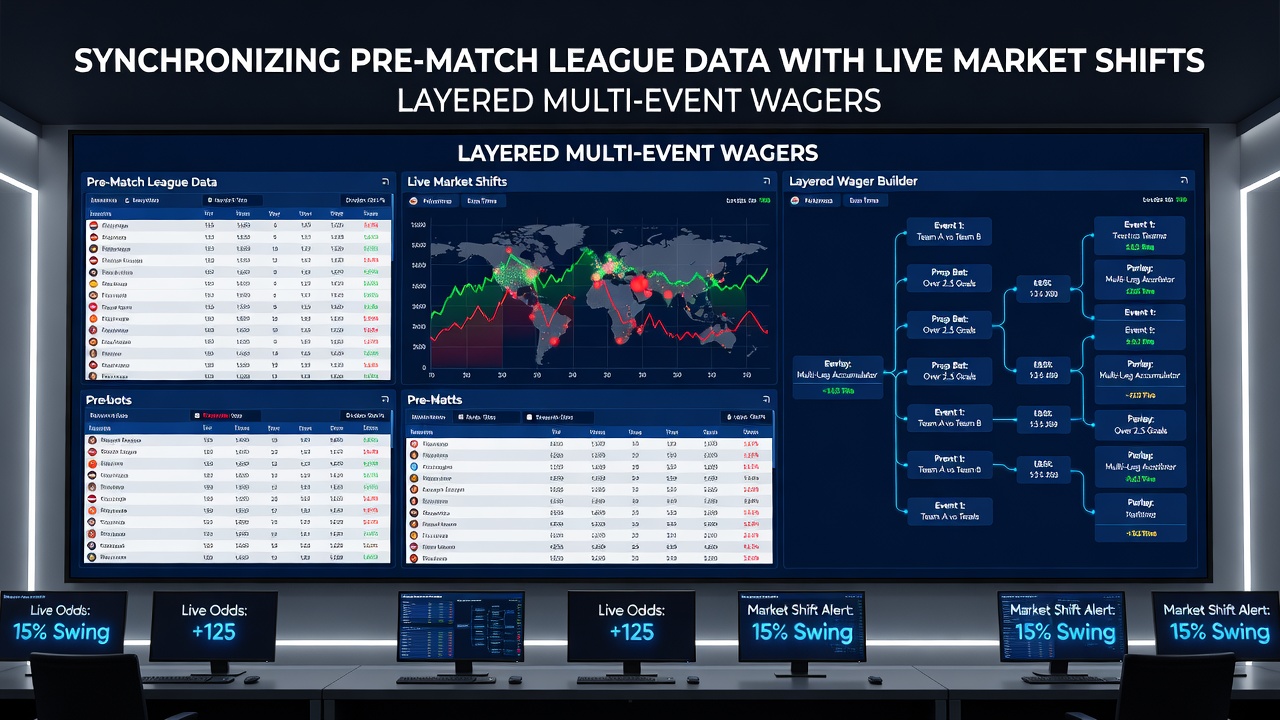
Additional inputs arrive from officiating data providers and venue sensors. These streams feed into visualization dashboards that display both pre-match baselines and current live adjustments side by side. Observers note that analysts review these dashboards to decide whether to add or remove legs from open accumulators before further market movements lock in new probabilities.
Regulatory Context in Mid-2026
Jurisdictions outside the United Kingdom introduced updated reporting requirements for data synchronization tools during July 2026. Australian state regulators, for instance, began requiring operators to log every live odds adjustment alongside its corresponding pre-match input for audit purposes. Canadian provincial bodies followed with guidelines that mandate timestamp verification on all accumulator recalculations exceeding a defined stake threshold. Such measures aim to maintain transparency without prescribing specific software architectures.
Conclusion
Effective synchronization of pre-match league data with live market shifts supports the construction and maintenance of layered multi-event wagers by maintaining alignment between historical models and current probabilities. Technical implementations rely on standardized data formats, low-latency streaming connections, and cross-sport correlation matrices. Industry reports from multiple regions confirm that these practices continued to evolve through July 2026 as leagues and regulators adopted new reporting standards. The resulting systems allow accumulators to incorporate ongoing adjustments while preserving the structural integrity of each layered selection.